
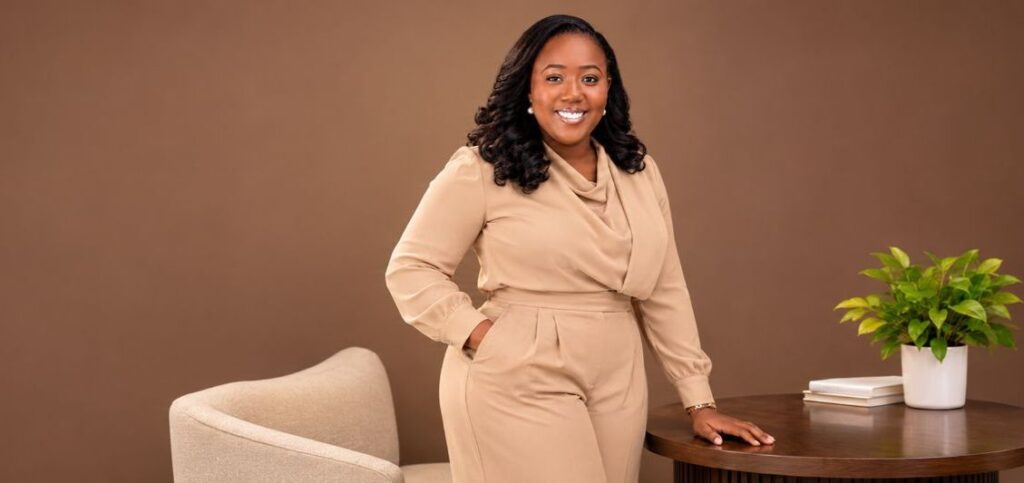
Opeyemi Abiola-Ige is a Professional Counselor, Emotional Wellness Coach, Certified Christian Counselor, Addiction Recovery Coach, speaker, wholeness advocate and entrepreneur. She is the Founder and Lead Counselor of WholeSpace Wellness, a counselling and emotional wellness practice supporting individuals, couples and families through counselling, emotional wellness coaching, addiction recovery support, inner healing and relationship support.
She is also the Founder and Lead Servant of The Wholesome Woman, a faith-based community committed to nurturing women who are spiritually grounded, emotionally healthy, purposeful and equipped to thrive. Through her work, speaking engagements and community initiatives, Opeyemi advocates for more open, practical and culturally relevant conversations about emotional wellness, faith, relationships and personal growth
We are often quick to ask people how they are doing, but how often do we create the space for an honest answer? Behind the smiles, responsibilities, careers and family commitments, many people are carrying emotional struggles they rarely have the opportunity to talk about. For Opeyemi Abiola-Ige, creating room for these conversations is at the heart of her work.
As the Founder and Lead Counselor of WholeSpace Wellness, Opeyemi is helping individuals, couples and families better understand themselves, navigate difficult experiences and take intentional steps towards emotional well-being. Her work also extends to The Wholesome Woman, a faith-based community where women are encouraged to grow spiritually, build meaningful relationships and become more intentional about their lives.
The Naija Business Info (NBI) team sat with Opeyemi to discuss her journey, the inspiration behind WholeSpace Wellness, the importance of emotional wellness in African communities, the relationship between faith and counselling, and her experiences navigating motherhood, entrepreneurship and community leadership. In this conversation, she shares the convictions driving her work, the conversations she believes society needs to have, and her vision for making wellness more accessible.
NBI: Take us back to the beginning. What was Opeyemi like growing up, and what experiences shaped the woman you are today?
OAI: I was a very observant person growing up. I noticed people, their emotions, what they said and sometimes the things they did not say. I have always been drawn to people and their stories.
Over time, my experiences, faith, family and interactions with people have shaped how I see life and relate with others. They have taught me the importance of healing, self-awareness and having the right people around you. I have come to understand that our experiences shape us, but they do not have to define the entirety of who we become.
NBI: Did you always imagine yourself working in counselling and emotional wellness, or did your journey lead you here in an unexpected way?
OAI: I did not necessarily imagine this exact path for myself. I have come to understand that purpose is not always a straight road. Sometimes, the different experiences and interests we have begin to come together in ways we may not have anticipated.
Counselling brought together several things that have always mattered to me: my love for people, my faith, my desire to see people heal and my passion for helping individuals become healthier. Looking back, I can see how these different parts of my life have contributed to the work I do today.
NBI: What inspired you to establish WholeSpace Wellness, and what gap were you hoping to address?
OAI: WholeSpace Wellness came from a desire to create a safe, non-judgmental space where people could talk about the things they carry.
Many people are functioning, smiling, working, raising families and showing up for others while struggling internally. Yet, there are not always enough spaces where they can openly discuss what they are experiencing without feeling judged or misunderstood.
I wanted to contribute to changing that. I wanted emotional wellness to become something people could discuss safely, practically and in ways they could relate to. Through WholeSpace, we help people understand themselves, recognise patterns, navigate relationships and take steps towards healing.
NBI: The idea of wholeness is central to your work. What does being whole mean to you, particularly in a society where people often feel pressured to appear strong or have everything together?
OAI: Wholeness does not mean that you have no wounds, struggles or difficult days. It is not about perfection. For me, it means being honest with yourself, understanding your story and acknowledging the things that have hurt you without allowing them to define your entire life.
It is about living from a healthier place, where your emotions, relationships, faith, choices and sense of self are not constantly fighting against one another.
Wholeness is a journey. It involves growth, self-awareness and the willingness to do the work required to become healthier. You may not have everything figured out, but you are becoming more intentional about how you live and relate with yourself and others.
NBI: What are some of the difficult conversations about emotional wellness that you think African families and communities are still avoiding?
OAI: I think we still avoid conversations about family patterns, emotional pain and the things we have normalised simply because they have been part of our experiences for a long time.
We hear statements like, “That is just how our family is,” or “Everybody went through it.” But something being common does not automatically make it healthy.
We also need to have more conversations about boundaries. Many people believe that saying no is disrespectful, protecting your peace is selfish or being available to everyone is what makes you a good person.
These are important conversations because people need to understand that they can love their families, respect others and still recognise when certain patterns or expectations are unhealthy.
NBI: Emotional wellness conversations sometimes feel distant from the everyday realities of many Africans. How can wellness become more culturally relevant and accessible?
OAI: I believe we must begin with our African realities. Family, community and faith are important parts of our lives, so we cannot simply take conversations from another culture and expect them to fit perfectly into our context.
We need to talk about the things people experience every day: marriage, parenting, family expectations, work, church, friendships, finances and the pressures that come with navigating these different areas of life.
Wellness conversations must also be accessible. They should not be reserved for a particular social or economic class. Ordinary people should be able to understand them, relate to them and see how they can apply them in their everyday lives.
NBI: Your Christian faith is an important part of your identity. How do you navigate the relationship between faith and professional counselling, especially when working with people who are experiencing emotional pain?
OAI: My Christian faith shapes how I see people. It reminds me of their value, dignity and capacity to grow. However, I also understand the importance of respecting the counselling process and meeting people where they are.
Faith should not be used to dismiss people’s emotions or make them feel that they simply need to pray and move on. We can trust God and still acknowledge that we are hurting. We can pray and still need support. We can have faith and still take responsibility for the work of healing.
For me, faith and emotional responsibility can coexist. One does not have to cancel out the other.
NBI: You are a wife, mother and entrepreneur, while also leading communities and supporting others through their personal journeys. How have these different roles influenced your understanding of people and the work you do?
OAI: These roles have humbled me in many ways.
Marriage and motherhood have taught me that people are not projects to be fixed. Everyone has emotions, needs, limitations and different ways of processing experiences. Motherhood, in particular, has taught me patience and the importance of paying attention to communication beyond words.
Entrepreneurship has also taught me about pressure, responsibility, resilience and recognising my own limits.
All these experiences have made me more compassionate. I have come to appreciate that people are often doing the best they can with what they know and what they have. That understanding influences how I approach people and the work I do.
NBI: Looking ahead, what is your vision for WholeSpace Wellness, and what kind of impact do you hope it will have in the years to come?
OAI: I want WholeSpace Wellness to become a trusted space for emotional wellness, particularly for Africans. I see it growing beyond one-on-one counselling into a platform for education, conversations, workshops, resources and partnerships that make emotional wellness more accessible.
Ultimately, I want people to understand themselves better. I want them to recognise the areas they need to work on, understand when they need support and know that healing is possible.
I hope our work contributes to healthier individuals and healthier relationships, both with ourselves and with the people around us.
NBI: Finally, what would you say to someone who is struggling silently, perhaps showing up for everyone else while privately dealing with emotional pain?
OAI: You do not have to pretend that you are okay when you are not. What you are carrying may be heavy, but it does not have to define your entire life.
Give yourself permission to ask for help. Talk to someone you trust. Find a safe space where you can express what you are experiencing, and take the next step towards getting the support you need.
Your current situation is not the end of your story. There is room to heal, room to grow and room to become whole.

More Stories
Helium Health Secures $2.5 Million Google.org Grant to Deploy AI in Maternal Healthcare
Chimamaka Ige: On Purpose, Personal Growth and Building What Matters
OLUWASEUN AZEEZ ADEBOWALE: BEYOND REVENUE, BUILDING BUSINESSES THAT CREATE VALUE