

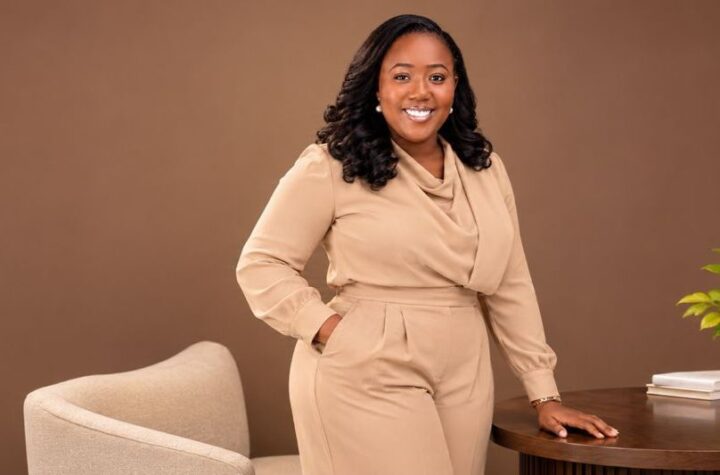
Chimamaka Ige is a business strategist, entrepreneur, speaker, and author passionate about helping people and organisations grow, thrive, and fulfil their potential. Through Advance Consulting, she works with entrepreneurs and businesses to develop sound strategies, build practical systems, and create structures that support sustainable growth.
Her work goes beyond business strategy. Guided by her Christian faith and a deep commitment to helping people heal, grow, and live purposefully, Chimamaka is equally interested in what it means to build a meaningful life while pursuing professional success. Her own journey, shaped by family, entrepreneurship, career transitions, and personal loss, has continued to influence how she understands work, purpose, and the things that truly matter.
In this conversation with Nigeria Business Info (NBI), we sat with Chimamaka to explore her journey, the lessons she has learnt about building sustainable businesses, and why success should be about more than what we achieve professionally.
NBI: Before the titles, the business and everything you are building, who is Chimamaka Ige? What experiences, values and beliefs have shaped the person you are today?
Chimamaka Ige: My most important definition of myself is that I am a child of God. This is primarily who I am, and everything else flows from this truth, whether as a wife, mother, entrepreneur, strategist, speaker or any of the other expressions of my life and work.
I am on a mission to heal, inspire, equip and transform people and organisations, and you will find the different expressions of my life and work pointing in this direction.
My relationship with God is the deepest anchor for my soul. Knowing that I am His child, knowing the depth of His love for me, the journeys we have walked together and His faithfulness through different seasons have shaped how I see life.
My name also means goodness, and over the years, I have come to see that goodness woven through my story in ways I could not always have understood at the time. When I look back, I see the faithfulness of God through the different seasons of my life, and I see my life as His canvas, on which He is weaving a beautiful tapestry that tells the story of His goodness and mercy.
I honestly cannot point to one defining experience. I think it has been the accumulation of so many things: the painful and the pleasant, the expected and the unexpected, the lessons learned through relationships, the things I have had to unlearn and the moments that have stretched me. Every season has contributed something to the person I am becoming.
When it comes to my values, love is at the very top of the list. I believe it is the most transformational force on this side of eternity. Love gives us life, helps us find meaning, grounds us and shapes our legacy. I also value excellence, kindness and joy. Excellence, for me, is about giving what we have been entrusted with the care and commitment it deserves. Kindness is love expressed in practical ways, and joy reminds me to appreciate the life I am living, even as I build.
Ultimately, becoming who you are meant to be is a lifelong journey. I am still learning, unlearning, healing and growing. There is something beautiful about being rooted in who you are while remaining open to all that life, and in my case, all that God is still doing in you.
NBI: Looking back at your journey from consulting to building your own business, what experiences most influenced the direction you chose?
Chimamaka Ige: First, I think it is important to say that I didn’t quite make a proactive decision to start a consulting practice. I started Advance in obedience to God. You can read that and be surprised, but that’s the whole truth. LOL!
After business school, moving back home and getting into consulting felt like a dream come true. I started with a small consulting firm and imagined myself continuing along that path, growing in my career and working my way up.
Then my mum passed away, and my lens for viewing life changed. Just making money or building a successful career was no longer enough. I began to question things I had previously taken for granted. I think grief does that to you. It makes you pause and reconsider what matters, how you want to live and what you want your life to mean.
At some point, I resigned, thinking I would move into another strategy role. Instead, I found myself in a growing faith-based organisation. That season gave me room to apply the skills I had gained in consulting and see more closely how strategy could give businesses leverage and help organisations become more effective.
I’ve always been around business. I mean, I’m an Igbo girl! LOL! Both my parents were entrepreneurs. I watched my brother start a shirt brand while he was at university, and I ran a small business selling contact lenses during my own university days.
Growing up around entrepreneurship also meant witnessing the uncertainty that came with it: unpredictable cash flow, the constant hustle and the pressure of keeping things going. A conventional 9-to-5 seemed like the safer option, and I think I unconsciously made it my life strategy.
After both my parents passed away, I became involved in supporting their businesses and had the opportunity to observe the differences between them more closely. One had benefited from greater access to business education, clearer structures and a more deliberate strategy. The other had not benefited from those things to the same extent, and the outcomes were noticeably different.
That experience stayed with me. It brought home something I had also observed professionally: hard work and good intentions matter, but they are not always enough to build a sustainable business. The right knowledge, sound strategy, structure and systems can make a significant difference.
Over the years, I kept meeting hardworking, resourceful people with good ideas who needed more than encouragement. They needed clarity about their business models, better tools for making decisions and practical systems they could use.
These questions now sit at the heart of Advance Consulting. I want to help people build businesses that are not just active or profitable in the moment, but well thought through, well structured and capable of creating value over time.
NBI: Through Advance Consulting, you help entrepreneurs build sustainable businesses. What is the biggest mistake you see business owners making, and why?
Chimamaka Ige: I would frame it slightly differently. Rather than calling them mistakes, I would speak about the gaps I see among micro, small and medium-sized enterprises (MSMEs).
One of the biggest gaps is a lack of deliberate investment in business strategy and education. Oftentimes, we think strategy is for big organisations or that it makes a business rigid and slow to respond to opportunities. But strategy is neither of those things.
I like to think of strategy as the twin of execution. Before you do anything in your business, you need to be clear about your why, how, when and where. You need to weigh your available resources against your desired goals and chart the best route to get there. Strategy isn’t about copying your competitors. It is about understanding your business, your context and your goals, and determining the best route for you.
Another gap is vision. For many MSMEs, the goal is simply to keep running their small business. After all, it is making some money and helping them take care of their families. And there is absolutely nothing wrong with wanting to provide for your family. But I think we need to challenge ourselves to see beyond that as the only measure of what our businesses can become.
We need to recognise our capacity as problem-solvers, innovate, adapt, improve productivity and systemise our operations. We must believe bigger about what our businesses can become and the value they can create.
The third gap is the failure to evolve the business as it grows. In the early stages, the founder is often the salesperson, operations manager, customer service representative and sometimes even the person delivering the product or service. But as the business grows, its structure must also evolve.
Structure must never come as an afterthought.
When everything still depends on the founder, every decision has to pass through them, every problem requires their attention, and even when they hire people, they may struggle to let go because processes and expectations have not been properly documented or communicated.
Eventually, the founder becomes the bottleneck. The business may be making money, but it is exhausting to run. If the founder steps away, even briefly, things begin to fall apart.
You don’t have to have everything figured out from day one. But you do need to recognise that the skills that help you start a business are not always the same skills that will help you grow and scale it.
NBI: You created the Business Model Blueprint to help entrepreneurs build structured, scalable businesses. What does it take to build a business that can thrive beyond its founder?
Chimamaka Ige: First, it requires a shift in mindset. You have to move from seeing yourself as the person who must do everything to seeing yourself as the person responsible for building an organisation that can consistently create and deliver value.
That sounds simple, but it can be quite difficult for founders, especially those who have built their businesses from scratch. You know the business intimately. You know why you make certain decisions, how you prefer things to be done and what you expect from your customers and employees. But if all that knowledge exists only in your head, it becomes very difficult for anyone else to reproduce what you do.
So, as a founder, you have to ask yourself: What is my most important work? Is it to remain at the centre of every activity, or is it to build an organisation that can deliver value consistently, with or without my direct involvement?
Once you begin to make that shift, you need clarity around your business model. Who are you serving? What problem are you solving? What value are you creating? How do you deliver that value, what makes it stand out, and how does the business make money from it?
Then you need systems. Your processes cannot depend entirely on individual memory, the founder’s availability or simply going with the vibes. You need documented procedures, clear responsibilities, defined performance expectations and ways to measure whether the business is doing what it is supposed to do.
People are equally important. You need people who understand their responsibilities, have the capacity to perform them and are equipped to make appropriate decisions. That means investing in recruitment, training, leadership and accountability.
And, of course, you need to understand your numbers. A business can have increasing sales and still struggle because of poor margins, cash flow challenges or uncontrolled costs. You need to understand what drives your revenue, what it costs to deliver your products or services, and whether the business is financially healthy enough to sustain its growth.
These are some of the things we work on through the Business Model Blueprint. It helps growing SMEs put the structures, systems, roles and performance measures in place that their businesses need, while equipping founders to lead the next stage of growth.
Ultimately, building a business that can thrive beyond its founder doesn’t mean the founder becomes irrelevant. It means their value is no longer measured by how many things they personally do every day. Their value increasingly lies in the vision they provide, the decisions they make, the people they develop and the organisation they are building.
The goal is not simply to build a business that needs you forever. It is to build one strong enough to grow, adapt and create value even when you are not in the room.
NBI: Many African SMEs struggle with funding, market access and the systems needed to expand. Which of these barriers do you believe needs the most urgent attention, and why?
Chimamaka Ige: I think we need to look at these barriers in relation to one another, because they are interconnected. However, if I had to identify an area that needs urgent attention, I would focus on the systems, capabilities and overall readiness of businesses to grow.
Access to funding is important, but capital does not automatically make a business sustainable. If a business has an unclear model, weak financial management, inconsistent operations or no clear understanding of its market, additional funding can simply help it make bigger mistakes more quickly.
You cannot scale chaos!
The same applies to market access. We can create opportunities for businesses to reach new customers and enter new markets, but are those businesses ready to serve those markets? Can they meet the required standards, deliver consistently, price appropriately, manage larger orders and maintain healthy cash flow while waiting for payment?
These questions determine whether an opportunity becomes a sustainable source of revenue or an expensive lesson.
I also want to be clear that this is not about placing the entire responsibility on the entrepreneur. There are structural challenges that require attention, including access to affordable financing, infrastructure, regulatory complexity, trade barriers and the cost of doing business. Governments, financial institutions, ecosystem organisations and private-sector players all have important roles to play.
For instance, the Pan-African Payment and Settlement System (PAPSS) is helping to address one of the longstanding barriers to intra-African trade by facilitating cross-border payments in local African currencies.
But as we work to make trade easier and open up more opportunities, we must also invest in building businesses that are better prepared to take advantage of them. That means practical business education, stronger management capabilities, better financial practices, appropriate systems and access to the right networks.
I think we sometimes focus so much on helping businesses start that we pay less attention to what they need to become sustainable and competitive. We need to close that gap.
A business that is ready to grow is better positioned to use funding well, serve new markets and create jobs. The conversation must move beyond simply asking how we can give SMEs more opportunities. We must also ask how we can help them become ready to make those opportunities count.
NBI: With Innovate 2026, you are focusing on intra-African trade. What inspired this initiative, and what concrete change do you hope it will create for African businesses?
Chimamaka Ige: Innovate has always been about helping business owners and professionals think differently about growth and take practical steps towards it. For the 2026 edition, we wanted to focus that conversation on an opportunity I believe deserves far more attention from African businesses: trading within our own continent.
We hear a lot about the potential of the African market, particularly with the African Continental Free Trade Area (AfCFTA) creating a framework for greater trade across the continent. There are opportunities for businesses to reach new customers, develop partnerships, build supply chains and expand beyond their home countries. But knowing that an opportunity exists is very different from knowing how to pursue it or having a business that is ready to take advantage of it.
For many SMEs, expanding into another African market is exciting, but it can also feel overwhelming. How do you identify a viable market? What regulations and standards do you need to understand? How do you navigate payments, logistics, distribution and customer expectations? And how do you determine whether your business is ready for that next step?
These are the practical questions we want Innovate 2026 to help businesses explore.
Our theme this year is “Democratizing Trade: Simplifying Intra-African Trade for SMEs.” We want to make the conversation more accessible and actionable, particularly for businesses that may not have the resources, specialist teams or networks available to larger organisations.
One of the practical ways we are supporting this is through our proprietary Trade Readiness Assessment, which is free and accessible to everyone. It helps businesses evaluate their readiness across key areas, identify gaps and begin to understand what they need to strengthen. We want people to have a starting point for action, not simply leave with more information.
More broadly, the Innovate experience is designed around learning, connection, collaboration and action. We are bringing together people with relevant experience and perspectives to help participants better understand the realities of intra-African trade, explore opportunities and build relationships that could support their next steps.
Ultimately, the change I hope to see is for businesses to move from simply recognising the opportunity to being more deliberate about pursuing it. I want participants to leave with a clearer understanding of where their businesses stand, what they need to improve, who they need to connect with and what they can do next.
Your home market may be where you start, but it does not have to be the limit of your ambition. At the same time, expansion should be intentional, not simply aspirational.
We want businesses to see the opportunity, understand their readiness and take practical steps towards participating in intra-African trade.

NBI: You have also written You Are Enough and founded Healing From Negative Emotions. What inspired this side of your work, and how has it shaped your understanding of human flourishing?
Chimamaka Ige: I think this part of my work comes from the same place as my work in business, even though they may appear quite different at first.
A lot of my work has to do with equipping people and businesses. But I’ve come to understand that, to equip something effectively, you must first attend to its present condition. Sometimes, you must mend what’s broken, then tend to it and nurture it towards a state of wellness before building the capacity required to grow.
An unwell person or business will continue to bleed. No matter how much potential it holds, some of that potential will leak away over time if the underlying issues remain unaddressed.
And so, whether in consulting or healing, I find myself returning to the same principle: mend, tend, then equip. Restore what is broken, nurture what needs strengthening, and then build the capacity to do, become and achieve more.
Our experiences, beliefs, fears and unresolved emotions can influence how we see ourselves, the decisions we make, the relationships we build and even the dreams we dare to pursue. Sometimes, we focus so much on what we need to achieve that we don’t pay enough attention to what is happening within us or who we are becoming.
You Are Enough and Healing From Negative Emotions grew out of my own experiences and my journey with God and myself. They reflect my interest in helping people examine what they believe about themselves, engage honestly with their experiences and move towards greater wholeness.
In You Are Enough, we examine the lies we tend to believe about ourselves, explore the truth and do the work of uncovering what lies beneath those beliefs. For me, the message that you are enough doesn’t mean you have nothing to learn or that you should stop growing. It means your worth is not something you have to earn through achievement, approval or constant performance. You can acknowledge your humanity, recognise the areas where you need to grow and still treat yourself with dignity.
Healing From Negative Emotions, or HFNE, takes this concern into emotional wellbeing. It is a faith-based initiative that creates space for people to engage with difficult emotions and experiences through the Word of God, worship, prayer and spiritual reflection. The aim is not to pretend painful experiences don’t exist or simply tell people to get over them. It is to acknowledge what we feel, examine what may be shaping us and invite God into the process of healing and growth.
I also recognise that healing is not always straightforward, and no single programme can meet every need. Some experiences require deeper support from qualified mental health professionals and other trusted practitioners.
These experiences have deepened my understanding of human flourishing. I no longer think of flourishing simply as being successful, productive or achieving the things you set out to achieve. Those things can be wonderful, but flourishing also involves who we are becoming along the way.
We are not machines built simply to produce results. We are human beings, and our inner lives matter too.
NBI: Your faith is an important part of your life and work. How does it influence your decisions, particularly when you have to balance trusting the process with taking practical steps?
Chimamaka Ige: My faith influences how I see life, how I make decisions and how I understand my responsibility in the things I have been called to do. It is not something I switch on for certain parts of my life. It is part of the foundation from which I approach everything.
One thing my faith continues to teach me is that trust and responsibility are not opposites. Sometimes, we talk about trusting God as though it means sitting back and waiting for things to happen. But I believe there is a place for prayer, discernment, planning, preparation and taking action.
My husband often puts it this way: “Obedience is a reflection of faith.”
If I believe God has placed something on my heart to do, I still have a responsibility to think it through, understand what it requires, make the necessary preparations and take the steps available to me. Faith does not remove the need for wisdom or good stewardship.
At the same time, practical action does not mean I can control every outcome. I can plan carefully, work diligently and make what I believe to be the right decisions, and things may still not happen exactly as I expected. That is where trust becomes important for me. I have to be willing to do my part without assuming that I can determine every detail of how things will unfold.
Building a business has certainly brought this into focus. There are decisions you have to make without having every answer. There are times when you have to keep working even when the results are not yet visible. And there are times when you have to pause, reconsider your approach or accept that something needs to change.
My faith helps me navigate those moments. It reminds me that my identity and worth are not determined by the success or failure of a particular project, and that I can remain responsible and intentional without allowing every outcome to define me.
So, I would say the balance is this: pray, listen, prepare, act and trust God with what is beyond your control. You don’t have to choose between being a person of faith and being a person who thinks carefully and acts responsibly.
Faith is not passive. Faith is a verb. It requires both believing and doing.
NBI: How has your understanding of success changed as you have grown in your career, faith and family life?
Chimamaka Ige: Haha! This is a good one!
I think my understanding of success has become broader and, in some ways, more personal.
Earlier in my career, it was easier to measure progress by the things I could point to: the roles I held, the qualifications I earned, the work I delivered, the milestones I reached, how much I earned, who I knew and the recognition I received. Those things matter, and I don’t think we need to pretend otherwise. Achievement can be meaningful, and there is nothing wrong with wanting to do good work and make a significant contribution.
But as I grew older, I began to ask different questions. What quality of life am I building? What is the actual cost of the success I am pursuing? Who am I becoming? Are the people and relationships that matter to me receiving the care and attention they deserve? Is this the life God desires for me?
I also began to question how much of my life I was directing for myself and how much was being shaped by other people’s expectations and prevailing trends. Was I living authentically, or had I gradually morphed into a version of myself that looked pleasing on the outside but wasn’t well on the inside?
There’s so much to unpack there, but let’s just say I had a reset at some point in my life.
Being a wife and a mother has also made these questions particularly important. Family life reminds you that there are things that cannot be measured by professional milestones. There are moments, relationships and responsibilities that deserve your presence, and you cannot always postpone them until work is less demanding.
Building Advance has taught me something similar about business: growth itself is not always the best measure of progress. Bigger is not automatically better. More clients, more revenue or more visibility do not necessarily mean that a business is healthier or that the founder is building something sustainable. We need to ask whether we are growing in the right direction and whether what we are building is aligned with what truly matters.
Today, I think of success as the ability to live and work with purpose, make a meaningful contribution, take responsibility for what has been entrusted to me, steward my gifts with wisdom and grace, and continue growing as a person.
It includes building a business that creates value and can thrive beyond me, but it also includes nurturing my faith, my family, my relationships and my own inner life.
Ultimately, my understanding of success is rooted in who God created me to be. For me, a successful life is one that increasingly reflects His nature and aligns with His design and purpose for my life. It is a life I can recognise as meaningful, not just one that looks impressive from the outside.
NBI: If you were in a room with young professionals trying to find their direction, what is the one thing you believe they absolutely must know?
Chimamaka Ige: I would say there are three things I want young professionals to keep in mind as they navigate their careers and life.
First, understand that you are not your workings.
We live in a world that often measures people by what they do, where they work, how much they earn, what they wear, who they know and the kind of life they appear to be living. These things can be important, but they are not the entirety of who you are.
So, by all means, build your capacity, develop your competence, hone your craft and become good at what you do. Learn to solve problems, work well with people, take responsibility and steward your opportunities wisely. But don’t allow your achievements, or the absence of them, to determine your sense of worth.
Second, choose progress over perfection.
There is so much pressure, especially when you’re young, to have your life figured out. You feel you should know exactly who you are, what you want to do, where your career is headed and what the next five or ten years should look like. And when you look around and see other people seemingly making all the right moves, it can feel as though you’re falling behind.
But clarity often comes in the doing.
As you try things, ask questions, develop your skills and take responsibility, you begin to understand yourself better. You discover what you’re good at, what matters to you and sometimes what you don’t want.
Don’t let the fear of making the wrong decision keep you from moving. You will make mistakes, and some decisions will require you to change direction. Learn from your experiences, make adjustments where necessary and keep moving with wisdom. You don’t need to have the entire road mapped out; you just need to take responsibility for the steps in front of you.
Third, remember that no season is wasted. It will all add up.
You may not be in your dream job right now. You may be in a role that feels ordinary, doing work that doesn’t seem particularly exciting, or still trying to figure out where your strengths lie. But there is something to be gained from approaching each season with intention.
You can learn to solve problems, work with different kinds of people, communicate better, manage responsibilities and develop the discipline to see things through. You may build relationships, acquire skills or learn lessons that become valuable in ways you cannot yet anticipate.
This doesn’t mean you should remain in a situation that is no longer right for you or stop pursuing something better. It means that while you’re working towards what comes next, don’t despise where you are or overlook what the present season can teach you.
Most importantly, don’t treat the person you are today as though they are not enough simply because they haven’t yet become the person you hope to be.
Keep learning. Keep growing. Do your best with what is in your hands, and trust that the lessons, relationships and experiences you gather along the way will contribute to who you are becoming.
Ultimately, pursue excellence, but don’t make achievement your identity. Be intentional about your growth, but don’t let the pressure to have everything figured out rob you of the opportunity to learn along the way.
And whatever season you find yourself in, pay attention not just to what you’re becoming professionally, but also to who you’re becoming as a person.
Interview by Nigeria Business Info (NBI).

More Stories
Opeyemi Abiola-Ige: Building a Culture of Wholeness Through Wellness and Entrepreneurship
Dotun Soyemi: Positioning People and Organisations for Visibility, Influence and Impact
Olayinka Mordi: Building Businesses, Shaping Spaces, Creating a Legacy