
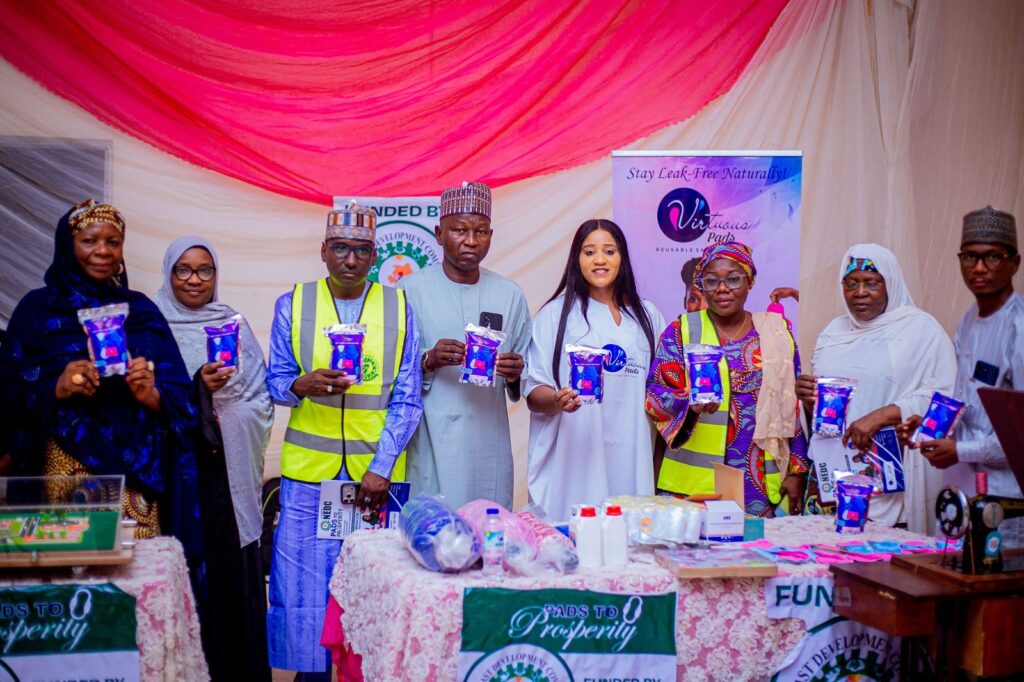
Virtuous Reusable Pads is taking a different approach to menstrual health in Northern Nigeria, one that places skills, local production and economic opportunity alongside access to menstrual products.
The organisation is leading the Pads to Prosperity Community Pad-Making Enterprise Programme, with Gombe State selected as the pilot state for the initiative. The programme is fully funded by the North East Development Commission (NEDC) and implemented by Virtuous Reusable Pads, with Herbloom Technologies Africa serving as the technical partner.
Built around the theme, “From Skills to Sustainable Enterprise: Building Health, Creating Wealth, Transforming Communities,” the programme seeks to equip women and communities with the skills, infrastructure and opportunities needed to produce reusable sanitary pads while creating sustainable livelihood opportunities.
At the centre of the initiative is Tabitha Arenson Abimiku, Executive Director of Virtuous Reusable Pads and Consultant/Programme Lead Implementation Partner for Pads to Prosperity, who is leading the programme’s implementation and enterprise-development strategy.
Rather than approaching menstrual health solely through the distribution of sanitary products, Virtuous Reusable Pads is developing a model that connects menstrual dignity with enterprise development.
The idea is simple: women should not only have access to products that allow them to manage their periods safely and with dignity; they can also be equipped to become producers, entrepreneurs and participants in the local menstrual-health economy.
From Reusable Pads to Sustainable Enterprise
Speaking at the launch, Tabitha Arenson Abimiku, Executive Director of Virtuous Reusable Pads and Consultant/Programme Lead Implementation Partner, described the programme as an opportunity to look beyond the immediate need for sanitary products and explore what menstrual-health interventions can create economically.
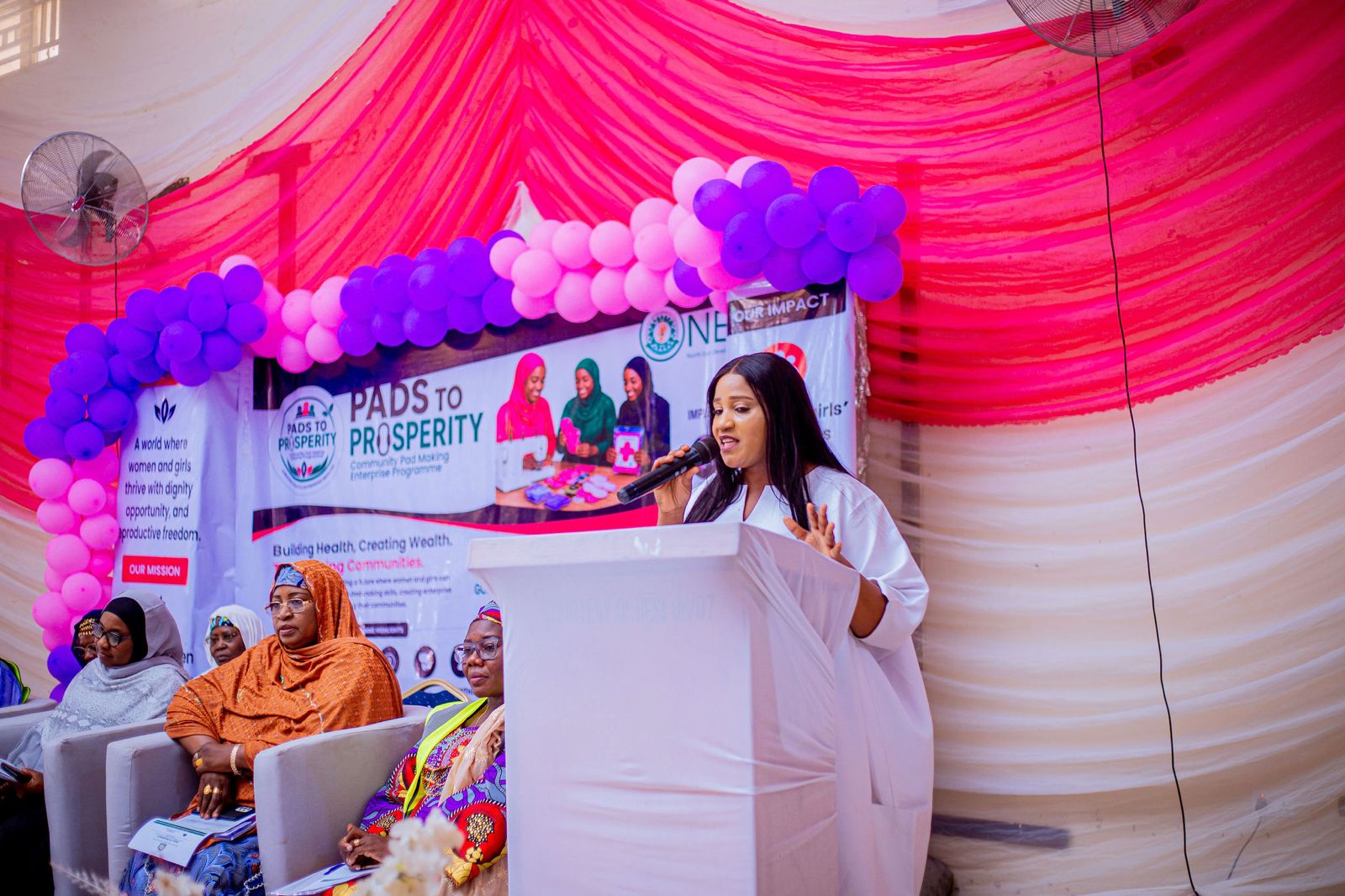
The organisation’s approach is centred on moving participants through a pathway that begins with practical production skills and progresses towards community-based enterprise.
The enterprise model presented during the launch outlines how beneficiaries can acquire production skills and subsequently develop sustainable businesses around the manufacture of reusable sanitary pads.
This places women at the centre of the solution rather than treating them only as beneficiaries.
For Virtuous Reusable Pads, the long-term ambition is to build an ecosystem in which menstrual health, skills development, entrepreneurship and community ownership reinforce one another.
Quality Is Part of the Model
Production alone, however, is not enough.
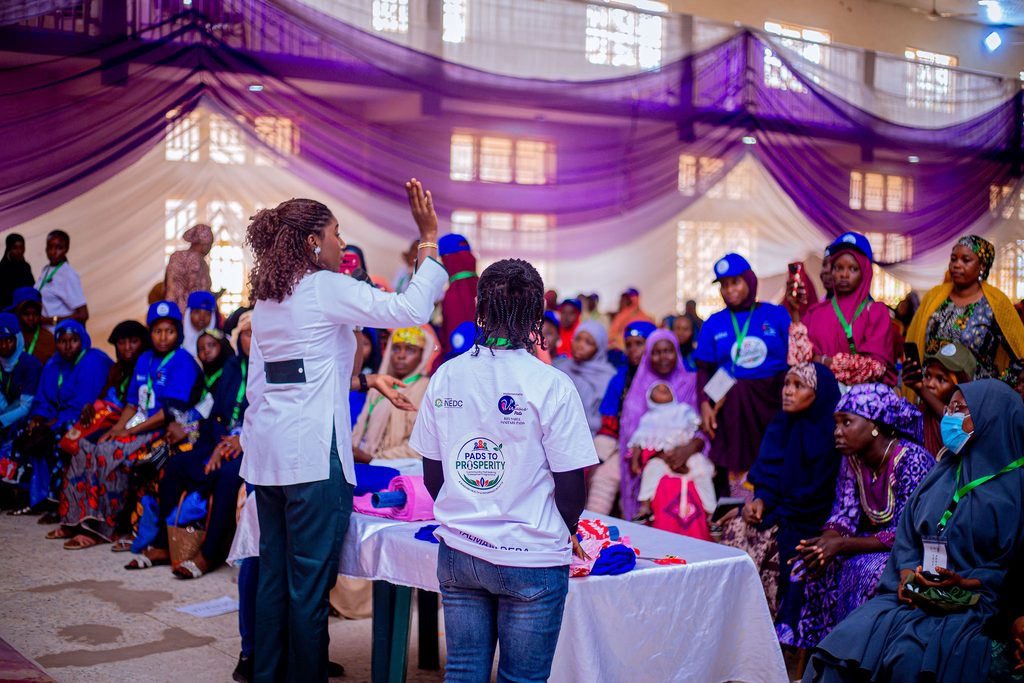
Quality assurance was therefore a major focus of the Gombe launch. Mrs. Ruth Ugo of Herbloom Technologies Africa led a Quality Gate session and live demonstration focused on sanitary-pad production standards.
The session highlighted the importance of maintaining quality throughout the manufacturing process, particularly as locally produced menstrual products move from training environments into actual use and commercial markets.
The technical partnership with Herbloom Technologies Africa is intended to strengthen this aspect of the programme and ensure that enterprise development does not come at the expense of product quality.
Keeping Girls in School
The programme also recognises the connection between menstrual health and girls’ education.
A strategic session involving the Adolescent Girls Initiative for Learning and Empowerment (AGILE) examined how menstrual health, dignity and access to appropriate products can influence girls’ ability to participate fully in education.
Particular attention was also given to inclusion and the menstrual-health needs of girls with special needs.
The approach reflects a broader understanding of menstrual health: when girls lack appropriate products and supportive systems, menstruation can become an obstacle to their education, confidence and participation.
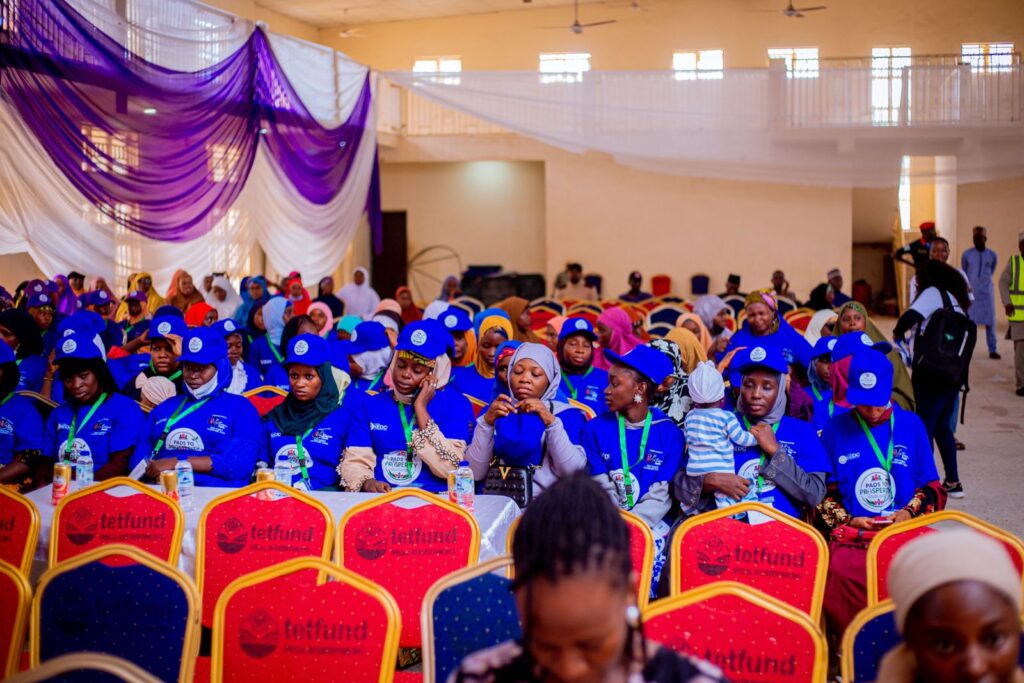
NEDC Funds the Gombe Pilot
The North East Development Commission is fully funding the Pads to Prosperity programme, with Gombe State serving as the pilot location.
The programme brings together government, civil society, education, health, traditional institutions, development organisations, women and youth groups around a model designed to connect menstrual health with local enterprise development.
Speaking at the launch, NEDC Gombe State Coordinator, Engr. Usman Muhammad, highlighted the importance of interventions that improve community wellbeing while creating sustainable economic opportunities.
A stakeholder investment session also examined how the programme could move beyond the pilot phase towards a sustainable investment model.
For Virtuous Reusable Pads, the objective is not simply to launch another menstrual-health project, but to develop structures that communities can eventually own, operate and sustain.
Four Community Pad-Making Hubs
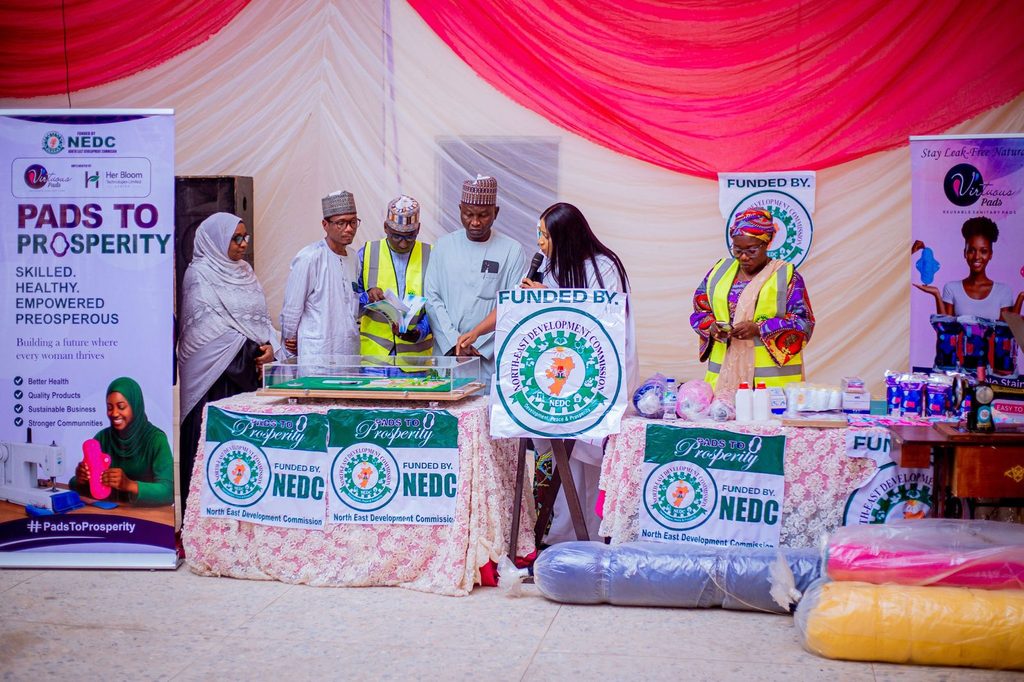
The unveiling of the architectural concepts and ground plans for four proposed Community Pad-Making Enterprise Hubs was the biggest highlight of the launch.
The unveiling gave stakeholders a first look at the infrastructure envisioned for the Pads to Prosperity model. The proposed hubs are designed to provide dedicated spaces for production, skills development and enterprise activities.
The four proposed hubs are planned across Gombe, Dukku, Funakaye and Yamaltu Deba Local Government Areas, forming the initial infrastructure for the pilot phase.
The unveiling brought together NEDC representatives, the Virtuous Reusable Pads team, Herbloom Technologies Africa and other stakeholders involved in the programme.
For Tabitha Arenson Abimiku, the unveiling represents an important step in moving Pads to Prosperity from a programme concept into a practical community enterprise model.
Stakeholder discussions also focused on community participation, institutional collaboration and the partnerships required to make the hubs sustainable.
Building a Menstrual Health Economy
Pads to Prosperity represents a significant shift in how menstrual-health interventions can be designed.
At the centre of Virtuous Reusable Pads’ model is the belief that menstrual dignity and economic empowerment do not have to be separate conversations.
A woman who gains the skills to produce reusable sanitary pads can contribute to improving access to menstrual products in her community while also creating an income-generating opportunity.
A community that develops local production capacity can reduce dependence on external product distribution while creating new economic activity.
And girls who have consistent access to appropriate menstrual products can have fewer barriers to participating fully in school.
The Gombe pilot brings these possibilities together.
With NEDC providing full funding, Virtuous Reusable Pads leading implementation, Herbloom Technologies Africa providing technical support and four proposed community enterprise hubs forming the foundation of the pilot, Pads to Prosperity is positioning menstrual health as a pathway to skills, enterprise and community development.
More than a sanitary-pad initiative, the programme represents a locally rooted model where menstrual dignity creates pathways to skills, skills create enterprise, and enterprise strengthens communities.



More Stories
Women Founders Take Centre Stage as Wetech 2026 Puts AI, Capital and Innovation in Focus
Damilola Lawal: Building Damilola The Alaga into a Visible Path for the Next Generation of Alagas
Lariat Alhassan’s Larclux Paints Expands Its Footprint in Nigeria’s Paint and Interior Finishing Industry